Write for the ear
Choose one short passage and read it aloud yourself. Short sentences expose awkward wording before a synthetic voice does.
Script to speech
If you are exploring narakeet ai voice, begin with the words you want heard, not a list of voice names. A short, well-punctuated script gives you something useful to evaluate when you reach a voice tool.

A voice-focused search starts with a listening task. General exploration may start with a broader media project; the comparison table below makes that distinction concrete.
Choose one short passage and read it aloud yourself. Short sentences expose awkward wording before a synthetic voice does.
Add punctuation where a listener needs a pause, and spell out names or abbreviations that could be misread.
At the destination, check the available voice options, then compare the spoken result with your intended pace and pronunciation.
These are three jobs for a voice-first brief, not exclusive features promised by a particular product. Each keeps the listening result ahead of the surrounding project.
Turn a dense lesson introduction into sentences a learner can follow without reading along.
A concise script makes it easier to judge whether the voice carries the teaching point. For the resulting sound as a deliverable, see narakeet audio.
narakeet audioTest whether an announcement sounds helpful rather than rushed when spoken.
A marked pause can separate the product name from the main benefit. For a closer look at stress and phrasing, see narakeet emphasis.
narakeet emphasisCheck a short explanatory passage for acronyms, dates and unfamiliar names.
Listening reveals pronunciation issues that a visual proofread may miss. For a broader view of the sound output, see narakeet audio.
narakeet audioUse a small sample first. The right sample depends on what the audience needs to understand, and any generation controls must be checked at the destination.
Draft two or three sentences that introduce one concept. Keep the terminology you need, but replace long subordinate clauses with separate thoughts before testing an AI voice.
Put the message a listener must remember near the beginning. A voice sample that sounds pleasant but obscures the action is not finished narration.
Use a short passage with a change in mood or speaker. Decide whether the available AI voice delivery makes that change clear before drafting an entire scene around it.
A narakeet ai voice search describes an intent, not a verified feature list. Compare the questions each starting point helps you ask; confirm actual controls and terms where you create the output.
Voice-focused starting point
How will this script sound to a listener?
General Narakeet exploration
What kind of media project am I making?
Voice-focused starting point
A short spoken passage
General Narakeet exploration
A broader project outline
Voice-focused starting point
Pace, clarity and pronunciation
General Narakeet exploration
How voice fits the complete presentation
Voice-focused starting point
Rewrite a sentence or adjust punctuation
General Narakeet exploration
Reconsider the project structure
Voice-focused starting point
Verify available formats at the destination
General Narakeet exploration
Verify project export options at the destination
Voice-focused starting point
Check terms for the intended narration
General Narakeet exploration
Check terms for every project asset
Two listening checks matter more than a feature checklist when you have not yet tested the actual service.
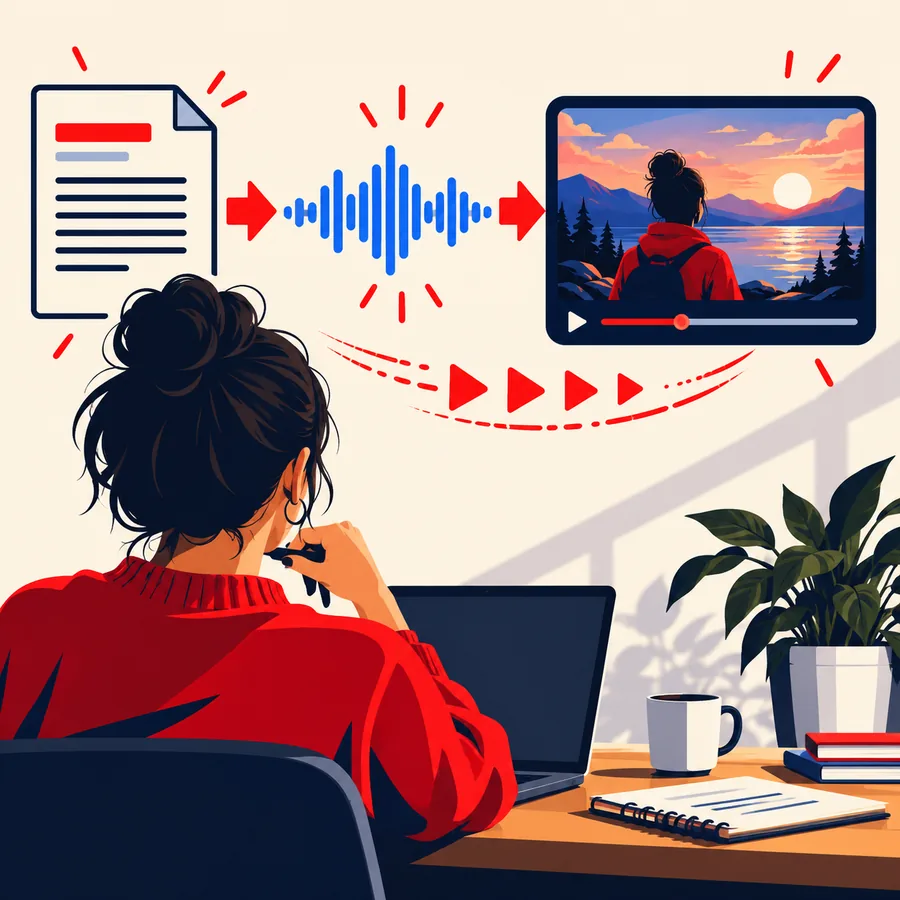
01
An expressive voice cannot rescue a sentence whose meaning arrives too late. In a Narakeet-related voice workflow, compare a plain reading with your intended delivery and revise the script if either version is hard to follow.
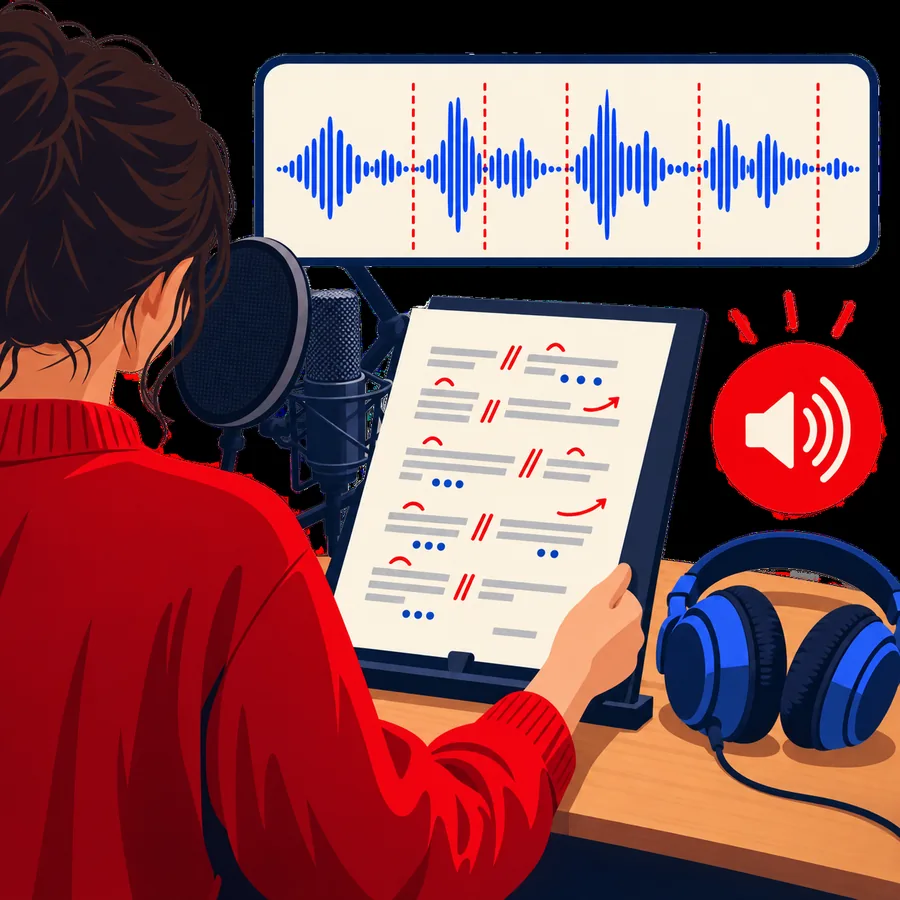
02
Listen for crowded phrases and pauses that change the meaning. If an AI voice option offers delivery controls, test them on one sentence at a time; do not assume a control or export format is available until you see it.
Bring a short passage with a clear purpose to the destination. Review its current voice options, output choices and usage terms there before relying on it for a larger Narakeet-related project.
It usually signals interest in creating or evaluating synthetic spoken narration associated with Narakeet. The phrase alone does not establish which voices, controls or outputs are currently available, so verify those in the tool you use.
Write short sentences and use punctuation to show where a listener needs a pause. Include names, numbers and abbreviations in your test passage so you can catch pronunciation problems early.
No. The voice is one part of the result; script clarity, pronunciation, pacing and a final listen all affect whether the narration communicates well. Review the entire passage rather than judging a voice from one isolated word.
No. Availability and export choices can differ by service and change over time. Check the destination's current options before building a workflow around a specific voice or format.